Since I made a post a while ago claiming that Zuko was autistic, some people have been asking for the “proof.” It seems fitting for me to provide said proof now, since it’s autism acceptance month. I’m going to try to be as comprehensive as I can, but if anyone has anything to add, feel free to do so! That said, please do not come on here to tell me that Zuko is not autistic. This is my headcanon, and these are all the things about Zuko that I relate to as an autistic person.
Alright, buckle up, kids, because Zuko is autistic af and I’m coming with all the receipts – and there are a lot of them.
Let’s start from the beginning. A lot of austistic people develop tactics early on that help us to ‘pass’ as allistic. When unsure of how to act in certain social situations, Zuko tends to mirror Azula. When he was younger, he was shown copying her sense of humor.
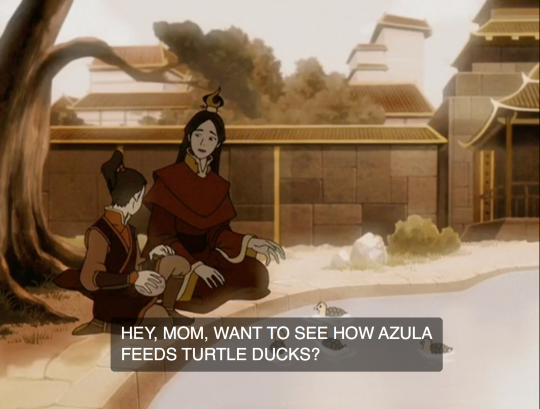
He threw a rock at a baby turtle duck and laughed, saying that this is how Azula feeds turtle ducks. Because Azula thought it was funny, he assumed his mom would think it was funny, too. It wasn’t until Ursa asked, “Why would you do that?” that Zuko even considered it might not be universally funny.
Zuko is shown laughing at things Azula thinks are funny more than once as a child. If Azula is not laughing directly at Zuko, he usually joins in on the laughter, even if he doesn’t understand the joke.
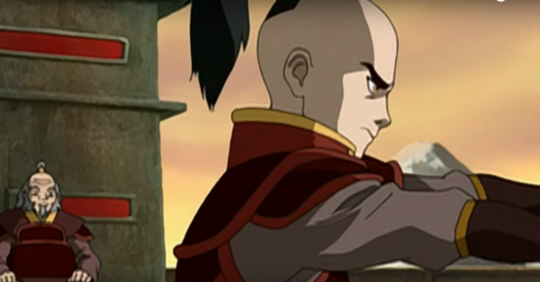
Another time Zuko tried to copy Azula was after she demonstrated her skills to their grandfather, Fire Lord Azulon. Zuko immediately attempted to demonstrate his own skills, even though he was not prepared.
Another thing that some autistic people struggle with is gross motor skills. When Zuko tried to prove to his grandfather that he was as skilled as Azula, he tripped both times he attempted to fire bend. He has obviously improved since that moment, but it took him a long time to do that.
“You have yet to master your basics. Drill it again.”
Zuko was at sea for three years with Iroh, seemingly doing nothing but training to get strong enough to capture the avatar. After three years, he was still working on his basics, as Iroh points out. Other benders have been shown to become masters much quicker than Zuko. Katara became a waterbending master after one episode. Aang mastered all four elements in the span of about a year. By the age of 12, Toph was already an earthbending master, and she taught herself. Zuko has had to work a lot harder than them to properly control his gross motor skills. It isn’t until he’s mastered his basics that he is able to progress as a bender.
Since Ozai was obviously not the most supportive parent, Zuko may have had to figure out other ways to hide his autism.
Another tactic he used was to practice social interactions before they happened. In this scene, he is shown giving a practice performance to a frog:
“The thing is, I have a lot of fire bending experience, and I’m considered to be pretty good at it. Well, you’ve seen me. You know, when I was attacking you?”
Obviously, this practice session was necessary, because Zuko said plenty of things here that could have easily further escalated the situation.
Even while using tools like mirroring or practicing social interaction, we all have moments where things might just feel a little off to allistic people.
Empathy
A lot of autistic people feel empathy differently than allistic people. Some of us might not feel empathy, some might experience hyper empathy, and some might just have a hard time expressing empathy. I suspect Zuko is leaning towards low empathy, or has trouble expressing empathy.
Exhibit A:
“My first girlfriend turned into the moon.”
“That’s rough, buddy.”
Notice how Zuko found it easier to talk about himself. He answered Sokka’s questions about Mai, and the conversation was moving along smoothly. It wasn’t until Sokka shared personal information about himself that Zuko seemed to be out of words.
Exhibit B:
Toph just told Zuko that her parents gave her everything she ever asked for, but not the one thing she really wanted: their love.
Zuko spends half of this conversation looking the other way. When he does look at her, notice his expression. He probably has no idea why she is telling him this, so he doesn’t know how to respond. And on top of that, he was under the impression that they were supposed to be looking for Aang.
A lot of autistic people have what you might call a one track mind (which I’ll get more into later). It’s hard for us to switch focus from one thing to another.
Toph wanted to partner with Zuko because she wanted a life changing field trip, but Zuko just wanted to find Aang. He was able to have ‘life changing field trips’ with Aang, Katara, and Sokka because he was actively focused on helping them with their specific problems. He had time to mentally prepare to help them. There was careful planning involved in each of those missions. He can’t help Toph in this moment, because her problem is conflicting with the problem they already have: finding Aang.
In both of the examples above, Zuko acknowledges the hardships that Sokka and Toph went through. “That’s rough buddy” and “I know you had a rough childhood.” This may be his way of trying to show compassion, even though it might come across as cold.
Zuko takes things at face value
Catching things like sarcasm, body language, metaphors, and ‘reading between the lines’ can be difficult for autistic people. This also gives us a reputation for being gullible, because it can be difficult to tell when someone is lying without being able to read the cues.
The first and most obvious example of this is what Zuko’s entire arc revolves around:
Capturing the Avatar
Ozai had just fought his own son, a 13 year old, in an Agni Kai. He burned Zuko’s face, intentionally causing permanent damage, and then banished him. All of this because Zuko spoke out of turn. At the time that Zuko was banished, the Avatar hadn’t been spotted for over 100 years.
Knowing all of that, it seems likely to me that Ozai was being cruel and sarcastic when he said that Zuko could come back after capturing the Avatar. It would be like saying “when pigs fly,” since at that point the Avatar was thought to have been gone forever.
Iroh, of course, knows this. That’s why in the beginning of the series, he kept reminding Zuko that the Avatar had not been seen in 100 years. He didn’t want Zuko to get his hopes up. Zuko, however, spends every minute for three years training to fight the avatar, and the second he sees something out of the ordinary, he automatically assumes that it is the the avatar’s doing. It’s kind of a miracle that he was right.
Capturing the Avatar = restoring honor. This is an example of both taking what his father told him as fact, and seeing things as black and white, which is also commonly associated with autism. Ozai told Zuko that capturing the avatar would restore his honor, so Zuko became obsessed with finding and capturing Aang. He truly believed that doing so was the only way to restore his honor and return home. It took Zuko years to realize that he could restore his honor in a different way than what his father told him.
He automatically believes Azula when she says he can come home
“Father regrets?”
It had been three years since he’d seen Azula, and he immediately took what she said at face value. He is excited to be going home, and he is frustrated with Iroh for being skeptical. When Iroh points out that he has never known Ozai to regret anything, Zuko says “did you even listen to Azula?”
Zuko takes what Azula says as fact, just like he has always done. This is why, as a child, he had to constantly tell himself, “Azula always lies,” because she probably had a habit of fooling Zuko. But now that it has been so long, without the constant reminder that Azula always lies, she takes advantage of the fact that Zuko trusts her so easily, and he falls for her lies once again.
He doesn’t catch on to Jin’s body language
In the episode ‘The Tales of Ba Sing Se,’ Zuko meets a girl named Jin. He immediately is threatened by her, because she keeps looking at him (eye contact is another thing that can be a challenge for autistic people). He assumes she knows they are fire nation. Despite the fact that he has seen her constantly smiling at him, he is completely surprised when he finds out she has a crush on him.
When Jin asks Zuko on a date, he shows up looking like this:
I think most people would catch on that this is Not A Good Look. But when Jin messes up his hair, Zuko gets frustrated. He says, “It took my uncle ten minutes to do my hair!”
So, Iroh told him this was a good hairstyle, and Zuko trusts Iroh, so he took his word as truth, and went along with it.
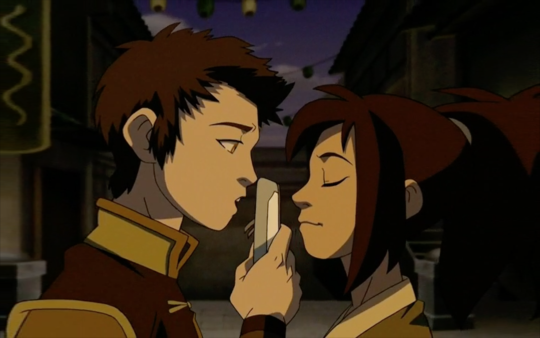
Later on in the date, Jin tries to kiss Zuko. Just before their lips touch, he holds a coupon in front of her face, exclaiming that he brought her a gift.
Zuko likes Jin. He risked a lot to light up the fountain for her. We know he wanted to kiss her, because when she kissed him later, he let her, and he even kissed her back for a moment before he bolted. But in this moment here, he missed the signs that said she was about to kiss him (the hand holding, Jin closing her eyes, leaning forward, etc), so he moved the conversation along in a way that he felt was natural, by giving her a gift.
He doesn’t realize that Sokka and Suki want time alone
Zuko runs into Suki when he’s about to go into Sokka’s tent. She’s clearly embarrassed, but Zuko doesn’t catch on.
“Sorry, do you need to talk to Sokka, too?”
Suki says no, so Zuko enters Sokka’s tent, to find Sokka like this:
There are roses everywhere, candles are lit, Sokka’s hair is down, he’s posing. Sokka was waiting for Suki to arrive, not Zuko.
But Zuko doesn’t catch on to that, either, so he sits right down and asks Sokka for advice, totally oblivious to what was supposed to be going down.
He can’t explain what is ‘off’ about Azula
A lot of autistic people have trouble recognizing patterns. Zuko has known Azula his whole life. He knows what her hair usually looks like. He knows what her makeup usually looks like. She doesn’t usually have dark circles under her eyes. She usually has better posture. I could go on.
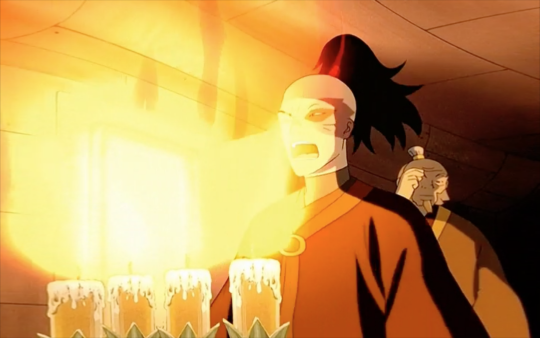
Azula challenged Zuko to an Agni Kai looking like this:
“I can’t explain it, but there’s something off about her.”
This is something I struggle with, too. If my mom dyes her hair, I can tell something is different, but it may take me a few days to figure out exactly what has changed. I think this is what was going on with Zuko here. He knows something is up, but he can’t immediately recognize that Azula has cut her own hair poorly, or that her makeup is different because she did it herself, or that she has dark circles under her eyes, or weird posture, etc.
Sensory issues
Sensory issues are also associated with autism. This can manifest in sensory overload and strong reactions to physical contact, among other things.
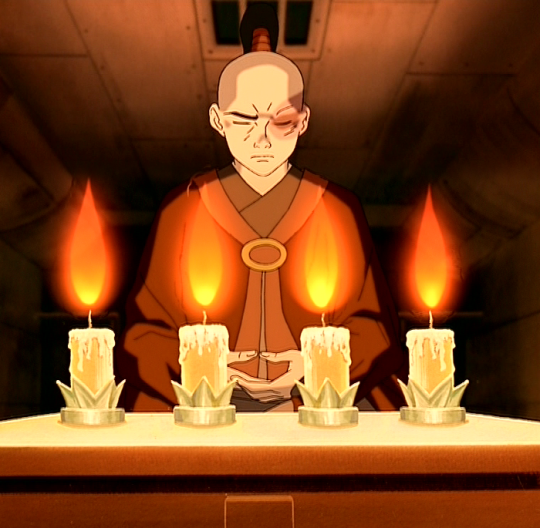
One way I’ve learned to avoid or come down from sensory overload is to self-isolate and meditate, which is something Zuko does very often. This can also be a way to recharge spoons or mentally prepare for something that might be exhausting.
This explains why Zuko would react so strongly when someone interrupts his alone time. He needs that time to prepare for every other moment in the day. When this time is interrupted, he lashes out, and has trouble containing his emotions.
Physical contact
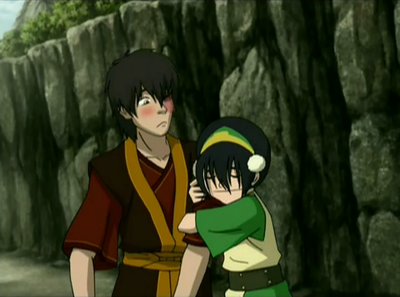
Zuko doesn’t always seem to know how to react to physical contact and affection. He reacts negatively if he isn’t prepared, or if he isn’t comfortable with the person. Even if he genuinely likes the person who is touching him (Jin, Iroh, Toph, Katara, etc), he still doesn’t seem to know what to do.
If Zuko is comfortable with the person who hugs him, he allows them to do so, but he still almost always looks flustered. He doesn’t always hug back, and when he does, it sometimes takes him a moment to process that he’s being hugged before he is able to return the gesture.
Difficulty Changing Plans
As I mentioned before, autistic people sometimes have a one-track mind. We may have difficulty changing plans, and may tend to see things as black and white, with no gray areas. All of these things describe Zuko to a T.
Zuko tends to get frustrated over any change of plans, but there’s one example I’d like to focus on.
Let’s talk about that angst coma. You know, that time Zuko got physically ill after he did something that completely altered the course of his life?
That’s the one. The thing is, change is hard. And it can be especially hard for autistic people. Zuko spent the last few years working towards one thing, and one thing only: capturing the avatar. Then, in one day, everything changed. He made a decision to free Appa, which was completely counter to what he has been working towards this entire time.
I’ve had “angst comas” before, and I know other autistic people who have had similar experiences. Sometimes you really do just need a few days in bed to recuperate and adjust to big changes.
some side notes that are worth mentioning:
Zuko takes Iroh’s metaphors literally
He repeats Iroh’s metaphors without understanding them, and they come across differently
It took him a minute to realize when Aang insulted him, because the insult was dressed up like a complement. “Hey, that was actually pretty smart of you.” Zuko’s first reaction is to smile proudly at the praise.
That scene when Aang wants to sit by Katara (bc he likes her) and Zuko is all, “I don’t get it, what’s the big deal? Just sit next to me.”
He saved Iroh’s smelly sandal when he was separated from him
He has a special interest in dao swords
Inaccurate self image (in his imagination he pictured himself without his scar)
He replays memories in his head of times when he thinks he may have said the wrong thing
He has meltdowns when things don’t go as he plans.
He sometimes messes up jokes when he’s trying to be funny
He paces back and forth a lot, perhaps as a way to stim
In conclusion Zuko is autistic af. I rest my case.
for the stim thing he also grabs his nose when hes stressed if that counts
and also when he tried to tell his uncles favorite tea joke to the gaang and forgot the set up and just gave the punchline because it was his uncles favorite joke and he thought it was funny so everyone else had to think it was funny too, right? not realizing what made it funny was the set up followed by the punchline and being confused when no one laughed because they only heard half the joke
I just remembered that Zuko spoke out of turn to argue that his father shouldn’t sacrifice loyal fire nation soldiers gratuitously on the battlefield and not only was he horrendously scarred across the face for it, but he was banished and sent on what was essentially an impossible task.
And not only was he 13, but by that point, he’d been psychologically abused by his father and even sister for being the “disappointment” and the unfavorite child.
He had some peace with his mother, for being more compassionate, and she genuinely loved and expressed affection for him but she was banished.
And he was left alone with a sister who was cruel to him and would eventually become something of a psychopath, and a father who had previously wanted to kill him for possibly not being a firebender.
And who would constantly criticize him and make the threat of physical punishment constantly hang over his head.
That is like.
One of the worst and most horrible fictional backstories ever.
And it’s not even uncommon in the avatar universe?
Katara’s mother was killed and her village was practically wiped out and left with no water benders except Katara.
Aang’s entire people and way of life was eliminated while he was gone.
I’ve already talked about how horrible Azula’s mental state was as the result of being made cruel and overly perfectionist with her shit father.
We see children in this series suffering under imperial fire nation rule in the earth kingdom.
We see jet and his freedom fighters, how a bunch of children were left without parents to take care of them.
We see water benders literally being chained in prisons and only allowed water from a cup extended on a pole like they’re fucking animals.
We see so many horrible things, but they’re watered down just a bit so that the show is still kid friendly.
ATLA did such a good job of showing us how depleted the southern water tribe was and how the fire nation left the earth kingdom in shambles, or under strict military rule.
The world building was gorgeous and the narrative, the storytelling, all of it was cheerful, yet serious when it needed to be.
And with the characters, you know, they’re not angsty and moody all the time.
Even before Zuko redeemed himself, he had his funny moments. He was a good person, despite his best efforts.
But the show, man.
I don’t know why but I just suddenly thought.
13 years old?
13 fucking years old?
And my heart just suddenly throbbed because that’s so fucking young.
Zuko was banished at such a young age and told he was worthless.
He was basically told to go find the avatar, who hasn’t been seen in a hundred fucking years, or never come home.
He had Iroh but he didn’t appreciate the man until he was gone.
He was so consumed with anger and bitterness that it became difficult for him to fire bend WITHOUT it.
That’s so heart breaking to me.
Even years later.
I’m still fucking affected by this.
Like.
Why was ATLA so fucking perfect?
Why will nothing ever top ATLA?
Its interesting tho to look at the show now as an adult and think “oh my god these kids are so young. This is so horrible. How can they put kids through this” But when i was that age it didnt feel that way. You dont realize how young you are until you grow older and are looking back. But as a kid, seeing the alta kids go through all that they did, i never questioned it or thought they were too young. i may have not witnessed a genocide but even at that age i had already been through some shit, which made atla all the more relatable.
Kids should never have to go through the things they do in atla, but the reality is that kids do go through these things. Some kids go through great losses. Some kids suffer from abuse, and refusing to acknowledge that these things happen doesnt make them go away. To ignore this reality in children’s media because it’s thought to be too much for them is really underselling kids and their understanding and resilience, especially kids who can see their own reality reflected in this show. Having a show that recognizes this reality and shows those kids working through their traumas, becoming stronger, and reaching their happy ending can be so validating, especially for kids who may not have a lot of media that shows them in this light.







 I Lost My Heart in Republic City